New smoker owners often want to start with brisket, but easier cooks build skills faster. Shorter, more forgiving recipes teach you how your smoker holds temperature, how much smoke you like and how to use a thermometer, all without a twelve-hour commitment.
These beginner-friendly ideas use general methods rather than precise recipes. Times vary with your smoker, the weather and the size of the food, so cook to temperature and tenderness rather than time. Follow food safety guidance from recognized authorities and your smoker’s manual.
Before You Start
- Learn how your smoker holds temperature with an empty test run
- Use a reliable thermometer. See the meat thermometer guide.
- Choose mild woods at first. See the best wood for smoking guide.
- Keep notes on each cook
Smoked Chicken Thighs
Chicken thighs are forgiving and cook relatively quickly.
Method
- Pat thighs dry and season with a rub. See dry rub basics.
- Smoke at a moderate temperature
- Cook until the internal temperature reaches at least 165 degrees Fahrenheit; many cooks take thighs higher for better texture
- For crispier skin, finish over higher heat
Tips
Higher smoker temperatures help skin render. Thighs stay juicy even when cooked past the safe minimum.
Smoked Sausages
Pre-cooked sausages only need reheating and smoke; raw sausages must be cooked to safe temperatures (160 degrees Fahrenheit for many ground meats, 165 for ground poultry).
Method
- Smoke at a low to moderate temperature
- Cook to the appropriate internal temperature
- Serve with mustard, peppers or onions
Pork Shoulder for Pulled Pork
Pork shoulder is a classic beginner cook because its fat and collagen make it forgiving. It takes many hours but is hard to ruin. See the smoked pulled pork guide.
Pork Spare Ribs or Baby Back Ribs
Ribs teach you about bark, tenderness and sauce.
Method
- Remove the membrane from the bone side if desired
- Season with a rub
- Smoke at a low to moderate temperature
- Wrap partway through if you like softer ribs
- Check tenderness with a bend test or probe
- Sauce near the end if desired
Smoked Salmon (Hot-Smoked)
Hot-smoked salmon is flaky and flavorful. Commonly cited guidance for fish is 145 degrees Fahrenheit.
Method
- Season with a simple dry brine of salt and sugar, or a rub
- Rinse and pat dry if brined, and let the surface dry
- Smoke at a low temperature
- Cook to the appropriate internal temperature
Cold smoking fish is a different, more complex process with specific food safety considerations; beginners should stick to hot smoking.
Smoked Vegetables
Smoke adds flavor to vegetables such as peppers, onions, corn, mushrooms and potatoes. Toss with oil and seasoning and smoke until tender.
Smoked Nuts
Toss nuts with oil and seasonings, spread on a tray and smoke at a low temperature, stirring occasionally. Watch closely, as nuts burn easily.
Smoked Meatloaf
Meatloaf absorbs smoke well. Cook ground beef meatloaf to 160 degrees Fahrenheit.
Building Skills Over Time
- Start with chicken thighs or sausages
- Move to ribs
- Try pork shoulder
- Then attempt brisket. See how to smoke a brisket.
Keeping a Cook Log
Record:
- Date and weather
- Food and weight
- Smoker temperature
- Wood used
- Start and finish times
- Results and notes
Questions to Ask Before Each Cook
- How much time do I have?
- What temperature does this need?
- Do I have enough fuel?
- Is my thermometer working?
Common Mistakes
- Starting with brisket
- Using too much strong wood
- Cooking by time instead of temperature
- Opening the lid too often
- Not keeping notes
A Sample Weekend Plan
A beginner’s weekend might look like this: on Saturday afternoon, smoke chicken thighs and some vegetables while learning how your smoker holds temperature. On Sunday, try a rack of ribs, taking notes on wood, temperature and time. The following weekend, take on a pork shoulder with an early start. Each cook builds on the last.
Comparison of Beginner Cooks
| Cook | Relative difficulty | Relative time | What it teaches |
|---|---|---|---|
| Sausages | Easy | Short | Temperature control |
| Chicken thighs | Easy | Short | Skin and doneness |
| Salmon | Moderate | Short | Gentle heat |
| Ribs | Moderate | Medium | Bark and tenderness |
| Pork shoulder | Moderate | Long | Patience and the stall |
| Brisket | Harder | Long | Everything together |
A Note on Sides
Smoked meals feel complete with simple sides: coleslaw, beans, potato salad, cornbread or grilled vegetables. Many sides can be made ahead, which frees you to focus on the smoker.
Questions to Ask Before Each Cook
- Do I have enough fuel and wood for the full cook, plus extra?
- Is my thermometer working and charged?
- When do I need to eat, and how much buffer have I built in?
- Where will meat rest after cooking?
- Do I have a safe place to cool and refrigerate leftovers promptly?
Final Pre-Cook Check
- Smoker preheated and stable
- Thermometer probes in place
- Wood chosen and ready
- Food seasoned and refrigerated until cooking
- Sides planned
- Extra time built into the schedule
A Note on Record Keeping
A simple cook log, with the date, food, weight, wood, temperature and timing, helps you repeat successes and fix mistakes.
Frequently Asked Questions
What is the easiest thing to smoke?
Chicken thighs and sausages are good starts.
How long does it take to smoke chicken?
It depends on size and temperature; cook to temperature.
What wood is best for beginners?
Milder woods such as fruitwoods are forgiving.
Can I smoke vegetables?
Yes. Many vegetables take smoke well.
Should I start with brisket?
Many cooks build skills with easier cooks first.
The Bottom Line
Start with forgiving cooks such as chicken thighs, sausages, ribs and pork shoulder, use a thermometer, keep notes and work up to brisket.
Editorial note: Brisketry is independent and reader-supported. This guide is based on research into manufacturer documentation, published specifications and widely accepted best practices; we have not been paid to mention any product. If we add affiliate links in the future, they will be clearly disclosed per our Affiliate Disclosure.
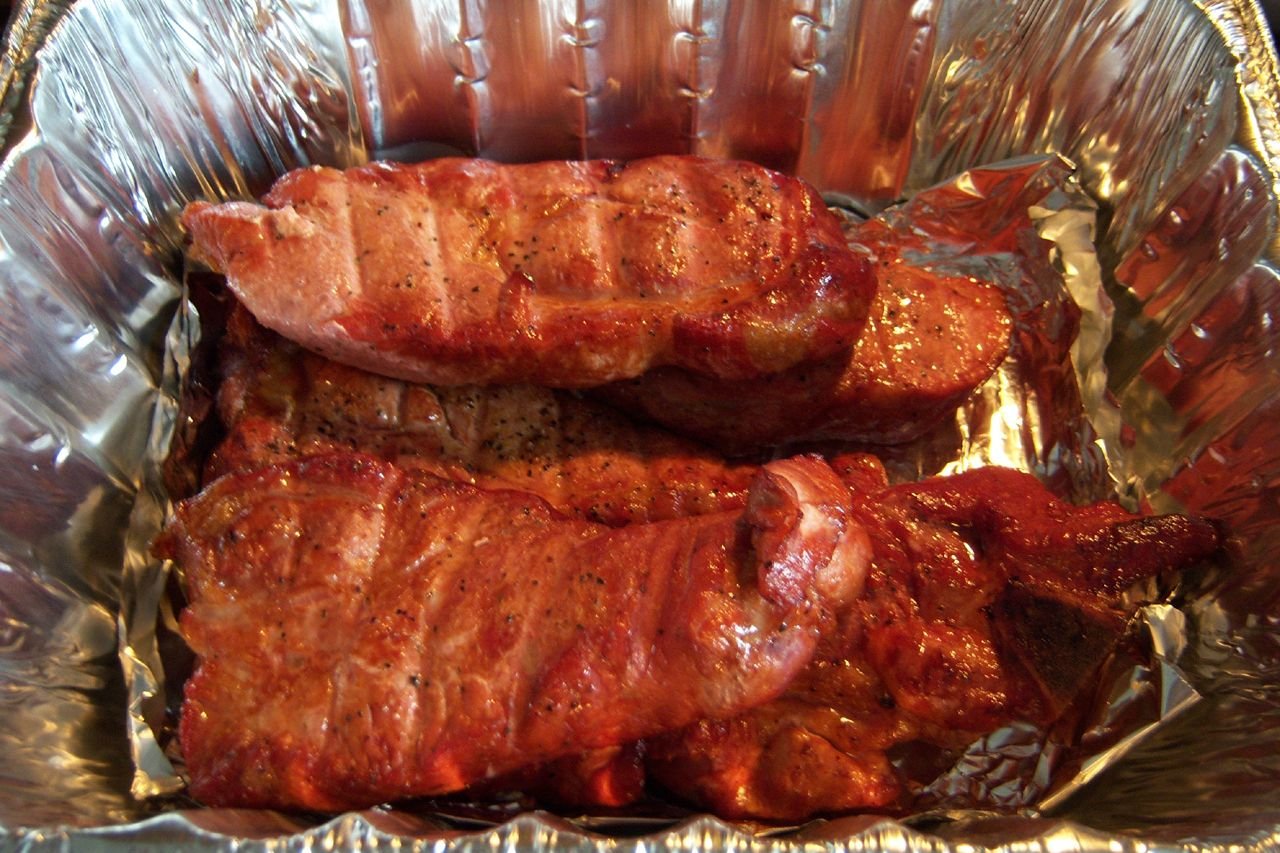
Photo: Smoked country style pork ribs by Dennis Brown, CC BY 3.0